ShadowThreatsINTELLIGENCE
SHADOWTHREATS INTELLIGENCE

Intelligence for the age of autonomous threats.

As offensive systems become increasingly autonomous, cyber defense must operate at machine speed. ShadowThreats collects, correlates and validates emerging threat intelligence for security practitioners while developing structured intelligence that can also be used by locally operated defensive AI.

External intelligence. Local defense.

INDEPENDENT
//
HUMAN-VALIDATED
//
MACHINE-READABLE
STI // INTELLIGENCE PIPELINE
EXTERNAL SIGNALSOpen source & advisoriesADVERSARY TTPsAgentic & behavioralVULNERABILITIESExposure & exploit signalsINTELLIGENCECORRELATIONTRUST GATEVALIDATIONMACHINE EXCHANGEStructured STI objectsDEFENSIVE AGENTSLocal agent evaluationSECURITY TEAMSInvestigate & respond
◆CONCEPTUAL MODEL: External threat signals correlated and validated for machine exchange and local defense.
DIAGRAM REF: STI-ARCH-01
CORE THESIS // MACHINE-SPEED DEFENSE

When threats become autonomous, intelligence must move at machine speed.

The next generation of cyber defense will increasingly involve autonomous and AI-assisted systems operating inside organisations. Those systems need trusted external intelligence that can be understood by both humans and machines.

END-TO-END INTELLIGENCE FLOW
01OBSERVE

External threat signals

Scanning lawfully accessible external signals, open advisories, exploit disclosures and adversary telemetry.

02CORRELATE

Context, provenance & confidence

Synthesising disparate signals into contextual intelligence, mapping tactics to MITRE ATT&CK, and verifying provenance.

03VALIDATE

Human review & trust

Senior practitioner review and confidence scoring to ensure accountability, defensible reasoning, and zero hallucination.

04EXCHANGE

Machine-readable intelligence

Structuring verified signals into standardised formats consumable by automated defensive systems at machine speed.

05DEFEND

Local security agents & teams

Customer-operated defense systems and human teams evaluate relevance locally against internal architecture and assets.

ARCHITECTURAL PRINCIPLE // DATA LOCALITY

External intelligence. Local AI defense.

ShadowThreats does not need to become the central repository for an organisation's sensitive security telemetry.

External intelligence can travel inward.

Sensitive internal telemetry does not need to travel outward.

NOTE: Current research and prototyping focus on delivering trusted external intelligence to customer-controlled defensive AI while keeping sensitive internal telemetry local.

TELEMETRY ISOLATION MODELREF: STI-LOC-01
SHADOWTHREATSExternal Intelligence & Correlation
↓ Machine-readable signal (inward only)
CUSTOMER ENVIRONMENT (PRIVATE BOUNDARY)ZERO OUTWARD TELEMETRY
Local Defense AgentEvaluates external signals locally against internal state
↓ Internal telemetry correlation & context
SIEM / EDR / IAM / NetworkEnterprise log stores, identity graphs & cloud workloads
↓ Prioritized decision support
Investigate · Alert · Recommend
RESPONSIBLE AUTONOMY // POLICY & GOVERNANCE

Autonomy with boundaries.

ShadowThreats provides intelligence and context. Customer-controlled defense systems determine what actions are permitted inside their environment.

PHASE 01Signal ingestion

OBSERVE

Monitor external threat indicators and correlate contextual relevance.

PHASE 02Local AI assessment

INVESTIGATE

Analyze internal exposure against verified adversary TTPs without exporting data.

PHASE 03Decision support

RECOMMEND

Synthesize prioritized mitigation pathways and defensible action options.

PHASE 04Governed execution

RESPOND

Execute targeted remediation within strict, customer-defined policy boundaries.

OBSERVATION & INGESTION

The external threat picture.

ShadowThreats combines intelligence from multiple external sources to build a rigorous, contextual picture of adversary operations. Our work includes public intelligence, security research, practitioner observations and selected underground sources, with a focus on distilling relevant signals from high-velocity noise.

01OSINT

Open-Source Intelligence

Synthesising public repositories, disclosure forums, researcher write-ups and technical security disclosures.

02ADVISORIES

CERT & Public Advisories

Monitoring sovereign CERT bulletins, national vulnerability databases and official emergency mitigation advisories.

03CVE / EXPLOIT

Vulnerability Intelligence

Tracking exploitation weaponisation, proof-of-concept velocity and root-cause weakness vectors across critical systems.

04ACADEMIC & LABS

Security Research

Analyzing advanced offensive techniques, emerging cryptographic weaknesses and novel agentic evasion behaviors.

05TELEMETRY

Curated Threat Feeds

Evaluating commercial and defensive feeds for contextual signal relevance, indicator noise and high-confidence telemetry.

06PEER NETWORK

Practitioner Observations

Incorporating direct defensive peer telemetry, operational incident patterns and frontline practitioner validation.

07RESTRICTED

Selected Underground Sources

Investigating lawfully accessible criminal discussion channels, credential broker activity and initial-access broker postures.

LEGAL & OPERATIONAL BOUNDARY:ShadowThreats focuses on lawful, defensive intelligence collection and analysis. It does not conduct unauthorised access or participate in criminal marketplaces.
DEFENSIVE SCOPE ONLY
TECHNICAL INTEROPERABILITY

Built for humans. Structured for machines.

Traditional threat reports are primarily written for people — formatted as long-form PDFs, static narratives, or broad email alerts. Agentic defense requires intelligence that can also be consumed programmatically at machine speed.

ShadowThreats is developing structured intelligence exchange for integration with security platforms and defensive agents. By combining adversary context, provenance and confidence with typed data objects, the same intelligence can support both human analysis and machine-assisted defensive workflows.

STANDARDS & INTEGRATION DIRECTION

We are exploring structured intelligence interchange aligned with established frameworks:

  • STIX 2.1Structured Threat Info Expression
  • TAXII 2.1Trusted Automated Intelligence Exchange
  • STRUCTURED APIsEvent-driven agent webhooks & exchange

* Areas of ongoing architecture and future interoperability. Does not imply completed commercial integrations.

STI // SIGNAL
CONCEPTUAL SCHEMA
TYPEThreat Signal
CONFIDENCEHigh
CONTEXTIdentity Infrastructure
ATT&CKMapped
PROVENANCERecorded
DISTRIBUTIONMachine-readable
STATUSHuman validated
SPEC: STI-DATA-FORMAT // V1-DRAFT
NOTE: Conceptual object mockup for technical illustration. Contains no operational threat or victim data.
DISTRIBUTION ARCHITECTURE

Three levels of intelligence exchange.

ShadowThreats organizes threat knowledge across three distinct tiers — balancing public research transparency with trusted practitioner collaboration and machine-speed defensive delivery.

PUBLICOPEN ACCESS

Selected research & intelligence perspectives

Curated briefing notes, macro architectural analysis, governance models and public research notes exploring autonomous cyber defense.

Audience:Security community, CISOs & researchers
Delivery:Web briefs & open publications
TIER STATUSAvailable at Launch
NETWORKCURATED ACCESS

Curated practitioner exchange & selected threat signals

Off-the-record technical roundtables, prioritized threat briefings, practitioner discussions and vetted early warning signals.

Audience:Invited practitioners & network members
Delivery:Peer sessions & direct briefings
TIER STATUSEmerging Model
MACHINEPROGRAMMATIC

Structured intelligence exchange for defensive systems

High-fidelity, machine-readable threat objects designed for automated evaluation and local defense agent consumption.

Audience:Defensive agents, SIEM/SOAR & platforms
Delivery:STIX / TAXII / Structured APIs
TIER STATUSIn Architecture & Design
* The emerging ShadowThreats model. The NETWORK and MACHINE tiers are in active design and exploratory development.
RESEARCH PROGRAMME

Current Research Focus

Our research addresses the structural challenges facing defensive security teams as threat velocity and automation accelerate. We focus on the intersection of autonomous systems, structured intelligence exchange, and human governance.

RES-01Adversary TTPs

Autonomous Threats

Agentic ransomware and machine-speed attack evolution.

STATUSACTIVE INQUIRY
RES-02Intelligence Formats

Machine Intelligence

Structured threat intelligence and AI-assisted correlation.

STATUSACTIVE INQUIRY
RES-03Defensive Architecture

Local Defense

Defensive agents, local AI and customer-controlled response.

STATUSACTIVE INQUIRY
RES-04Governance & Resilience

Resilience & Governance

Human oversight, recovery and threat-intelligence governance.

PRACTITIONER NOTE

Governing AI Agents Before They Govern the Network

Read practitioner note
STATUSACTIVE INQUIRY
PRACTITIONER RESEARCH CONTEXT

ISO/IEC 27001:2022 — Control 5.7 Threat Intelligence

OPERATIONAL INQUIRY

A practical auditor perspective on how organisations can turn threat information into actionable intelligence and demonstrate how their Control 5.7 process operates in practice.

PRACTITIONER NOTEFrom Threat Feeds to Actionable Intelligence
Read practitioner note
NOTE:Independent research initiative. Content is provided for research and intelligence purposes only.
RESEARCH AGENDA // CURRENT INQUIRIES

Research Agenda

RESEARCH CYCLE: Discover→Understand→Defend→Recover→Learn

Selected research topics currently under investigation. Public findings may be released as research notes, while detailed working papers and technical briefings are reserved for the private member environment.

Autonomous ThreatsTOPIC-01

Agentic Ransomware

How autonomous systems may change the speed and scale of ransomware operations.

RESEARCH TOPICIN PREPARATION
Machine-Readable IntelTOPIC-02

Intelligence at Machine Speed

Why defensive agents need structured, trusted threat intelligence.

RESEARCH TOPICIN PREPARATION
Defense ArchitectureTOPIC-03

External Intelligence, Local Defense

A model for combining shared threat intelligence with locally operated AI.

RESEARCH TOPICIN PREPARATION
Selected findings and public research notes may be published here. Detailed working papers and technical briefings are available within the private member environment.
MEMBER RESEARCH // RESTRICTED
PRACTITIONER NETWORK

A private practitioner network around real-world security problems.

ShadowThreats connects security practitioners, threat researchers, AI engineers and governance professionals working on threat intelligence, cyber resilience and emerging autonomous defense.

Rather than treating security through isolated silos, the network brings together different operational perspectives around shared security challenges — from adversary telemetry and incident recovery to autonomous defense boundaries.

Practitioner Perspectives & Disciplines
CISO & Security LeadershipSOC & Incident ResponseSecurity Architecture & IT OperationsThreat Intelligence & Malware ResearchOffensive SecurityCyber Resilience & ContinuityAI/ML Engineering & Agentic SystemsSecurity AutomationAI Governance & ISMS / GRC
Invitation and trusted referral only.
COLLABORATIVE FORMATS & EXCHANGE
01TELEMETRY

Practitioner Intelligence Exchange

Structured, off-the-record discussions on emerging threat tactics, agentic attack vectors and defensive telemetry.

02INCIDENT TRIAGE

Technical Roundtables

Small-group peer sessions analyzing frontline adversary campaigns, incident patterns and operational response challenges.

03PEER REVIEW

Research & Working Paper Review

Critical practitioner reviews of draft technical briefs, intelligence schemas and defensive models prior to publication.

04GOVERNANCE

Specialist Defense Workshops

Deep technical inquiries into machine-readable intelligence formats, ISO 27001 Control 5.7 operationalisation, and defensive agent governance.

05BRIEFINGS

Selective In-Person Briefings

Focused regional gatherings designed for deep technical trust, confidential briefings and candid peer communication.

06CONTRIBUTION

Practitioner Exchange & Contribution

Direct dialogue with security leaders, engineers and researchers exploring shared operational challenges, research collaboration or technical contributions.

Research collaboration · Practitioner exchange · Technical contribution

If you work on frontline cyber defense, autonomous threats or resilient recovery architectures, we welcome direct practitioner exchange.

WHY SHADOWTHREATS

The name ShadowThreats reflects where part of our research begins: in the less visible areas of the threat landscape.

Attackers exchange knowledge, discuss vulnerabilities and evolve their methods in underground and darknet communities long before many organisations become aware of the resulting risk.

ShadowThreats observes these signals, combines them with broader threat intelligence and translates them into knowledge defenders can use.

Understand the threat. Strengthen the defense.

FOUNDING STORY // TWO SIDES OF SECURITY

Built from governance and hands-on security.

ShadowThreats grew out of practical work on cyber resilience and security in regulated enterprise environments, combined with the complementary perspectives of Bernhard Kropacek and Elio Pashaj.

Building on earlier roles in enterprise IT architecture and IT service continuity, Bernhard later moved deeper into information security and AI governance. As an Enterprise IT Architect, he designed and tested resilient enterprise architectures involving microsegmentation, backup and restore, recovery capabilities and preparedness for severe cyber incidents.

As an IT Service Continuity Manager, he was responsible for planning and coordinating continuity and recovery testing in regulated environments, including scenarios aligned with DORA operational-resilience requirements.

That work reinforced a recurring lesson: ransomware resilience cannot be reduced to a single security control. Prevention, containment, recovery, architecture and governance have to work together.

Elio brought the complementary perspective of offensive security, ethical hacking and threat analysis.

Together, these perspectives exposed a recurring gap: cyber defense is often treated as separate disciplines — technical security, resilience and governance — although serious incidents cut across all of them.

ShadowThreats Intelligence develops a more integrated approach, connecting threat intelligence, offensive security, AI-assisted defense, resilience and governance. Frameworks such as ISO/IEC 27001, ISO 22301 and ISO/IEC 42001 provide reference points for security governance, business continuity and AI management, while technical research focuses on how emerging threats can be detected, understood and defended against at machine speed.

Cyber defense is not only a technical problem, and it is not only a governance problem. The next generation requires both.

INTEGRATED APPROACHREF: STI-MODEL-01
GOVERNANCEMANAGEMENT SYSTEMS
  • Security management
  • AI governance
  • Resilience & recovery
×
TECHNICAL SECURITYHANDS-ON PRACTICE
  • Offensive security
  • Vulnerability research
  • Threat intelligence
↓
SHADOWTHREATS INTELLIGENCESYNTHESIS

Integrated cyber defense

Connecting technical frontline realities with defensible enterprise governance.

FOUNDING TEAM

The founding team.

Bernhard Kropacek

Bernhard Kropacek

Co-Founder & Research Lead

LinkedIn

Bernhard has worked across enterprise IT architecture, IT service continuity, information security and AI governance. His earlier work included designing and testing resilient enterprise architectures and coordinating recovery and continuity testing in regulated environments, including DORA-aligned resilience scenarios. His current research connects these operational perspectives with threat intelligence, cyber resilience and agentic defense, drawing on both hands-on operational experience and management-system perspectives including ISO/IEC 27001, ISO 22301 and ISO/IEC 42001.

Focus:AI GovernanceCyber Resilience & RecoveryAgentic Defense
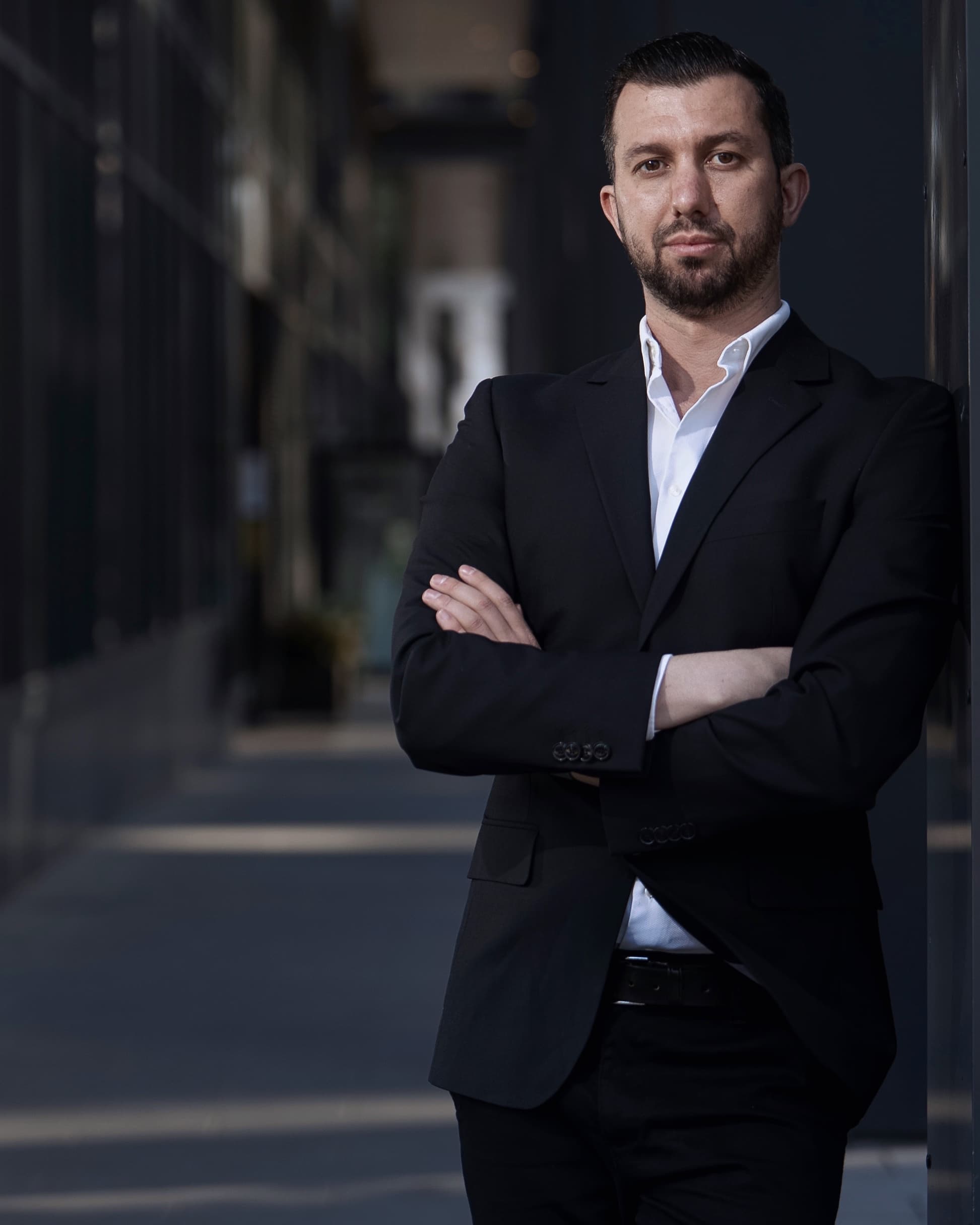
Elio Pashaj

Elio Pashaj

Co-Founder & Research Lead

Elio works across offensive security, ethical hacking and threat intelligence, with practical experience in enterprise IT security. His research focuses on attacker behaviour, software vulnerability analysis and the use of AI-assisted techniques to identify and understand security weaknesses before they can be exploited.

Focus:Offensive SecurityAI-Assisted Vulnerability ResearchThreat Intelligence

Independent by design.

ShadowThreats is an independent research initiative. Views expressed through ShadowThreats are those of the individual authors and do not represent their employers, clients or affiliated certification bodies.

POLICY // IND-01
PRACTITIONER EXCHANGE

Working on a problem worth investigating?

Ransomware · Threat Intelligence · Defensive Architecture · Agentic Defense · Cyber Resilience

Research collaboration · Practitioner exchange · Technical contribution

Start a conversation